
Proposed, then approved
What the practice no longer types
Every picture below is the product as the practice uses it, on an invented practice.
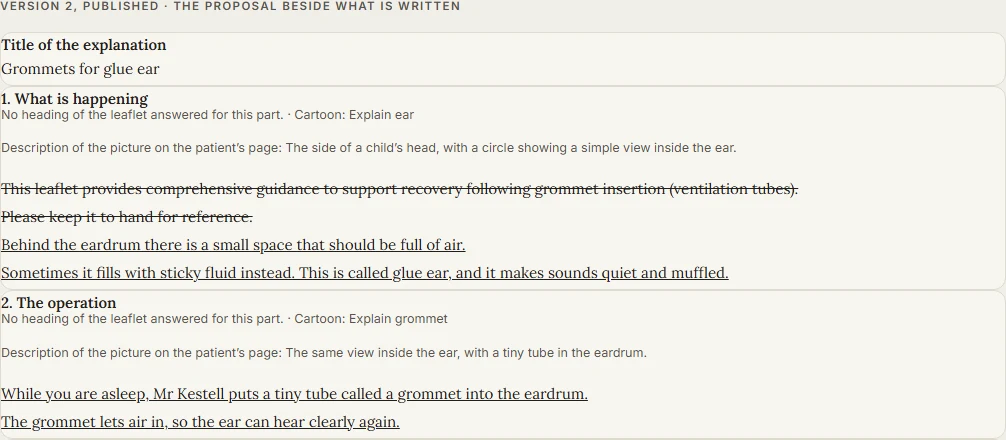
A leaflet becomes a child's explanation
Belford drafts the explanation from the headings of the practice's own leaflet. Struck through is what was proposed and not published. Underlined is what the clinician wrote in before publishing it.
Nothing reaches a child until the clinician, or a person the practice owner names, has approved it.
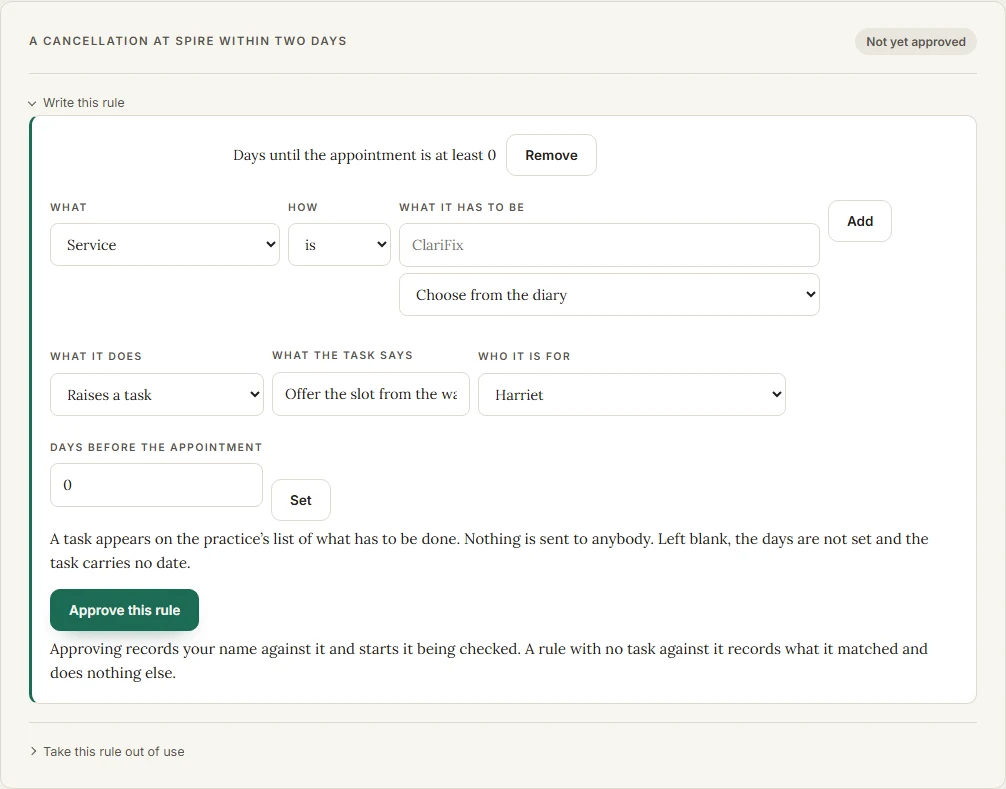
A sentence becomes a rule
“When somebody cancels at Spire with less than two days to go, give Harriet a task to offer the slot.”
Belford turns the sentence into a draft rule. A person approves the rule before it runs, and from then on Belford follows it exactly.
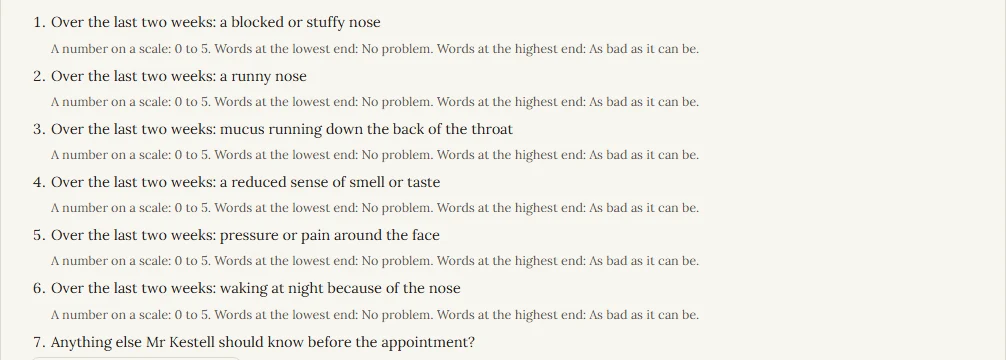
A questionnaire comes from the practice's own copy
Belford reads the questions, the answer scales and any cut-off the practice's blank copy states, and lays them out as a draft. Nothing is issued until the clinician approves that version, and the approved wording is then frozen.
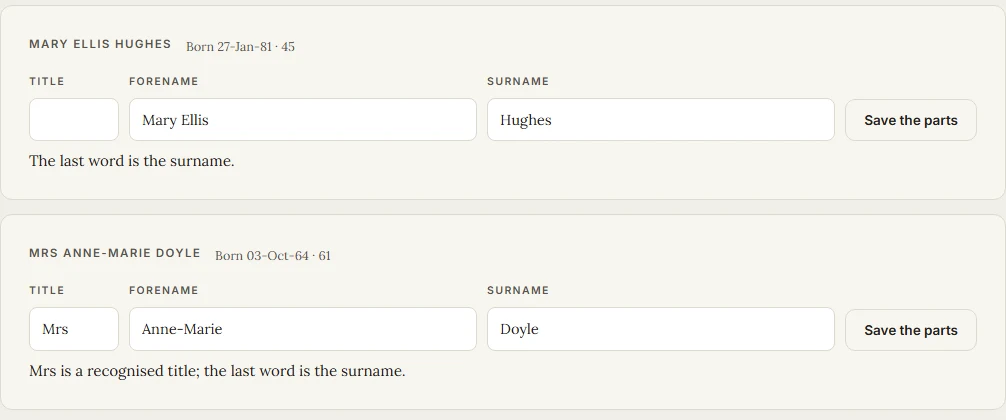
A name that arrived as one line
Title, forename and surname are proposed, each with its reason. Nothing changes until somebody saves the parts, and both what was proposed and what was accepted are kept, with the name of whoever accepted it.
Films
See it working
Each film is under three minutes, with captions.
For the patient
What the patient sees
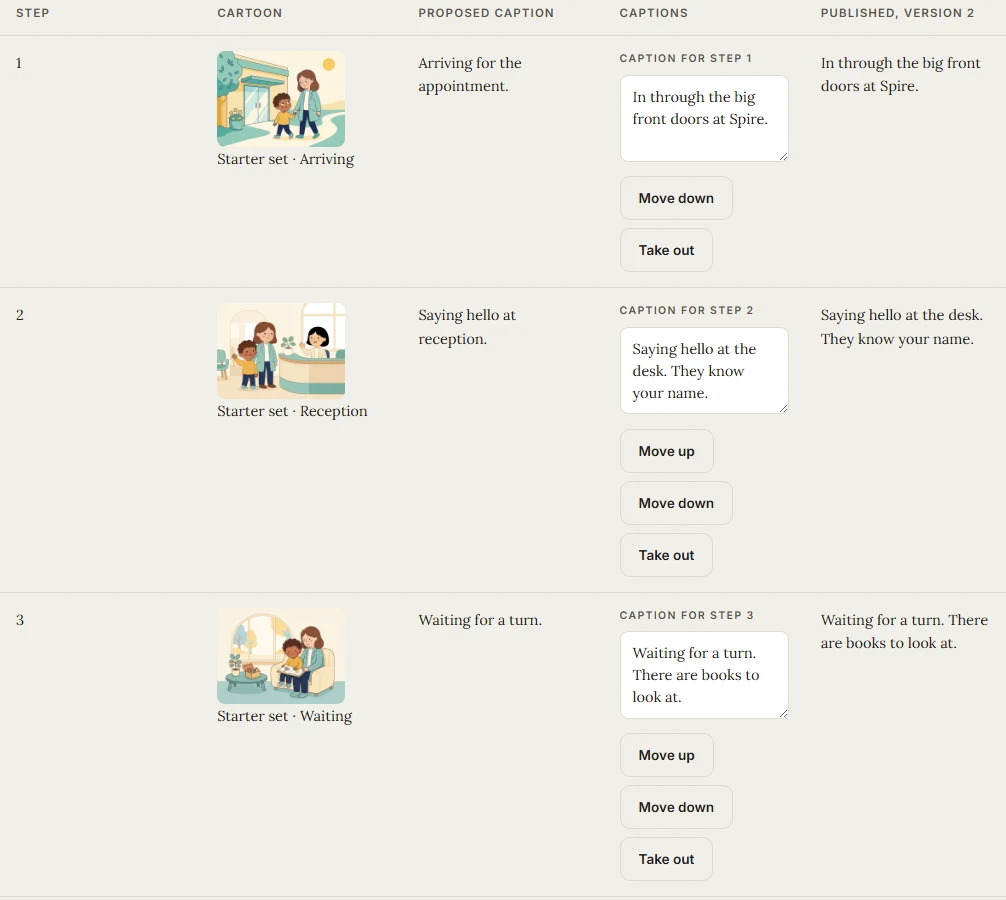
The version for a child
A child reads the visit as a story in cartoons, the operation in plainer words, and the journey in words a child knows. Belford proposes each from what the practice already holds. Nothing in it asks how the child is feeling. The part about getting better says when to call the practice, 111 or 999.
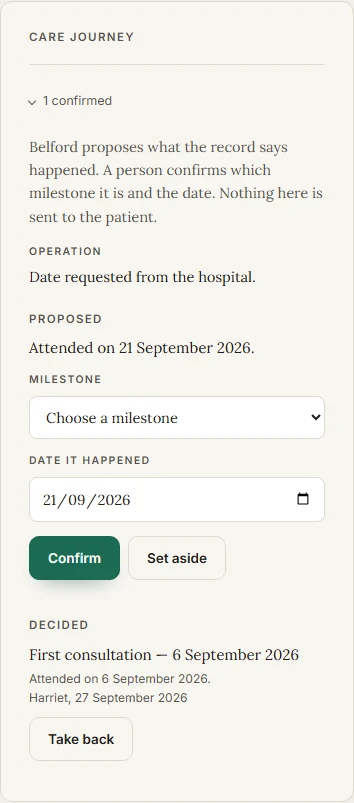
The care journey
The patient's own page lists what has happened against the pathway the clinician approved. Belford proposes each milestone from the record, such as an attendance or a date the hospital confirmed, and a person confirms it before the patient reads it.
On the day
Each venue has its own page: parking, the way in, and the hospital's floor plans with the route marked. When a clinic runs late, a member of the team presses how late, and the patients at that clinic read it on their page for the day.
How it behaves
What Belford does, and what it never does
- It takes no view of how serious anything is. A clinician approves a list of words, and a patient's message that uses one opens at once for the practice. A rule may raise attention. Nothing in Belford lowers it.
- It follows the practice's rules and nothing else. When a message goes, to whom and how often is set by the practice, and every rule names the person who approved it.
- It publishes nothing that a named person has not approved. The record keeps who approved which version, and when.
- It deletes nothing. A record that changes keeps what it said before, who changed it and when. Archived records stay out of the way of the working day.
- It names the person holding the file. Every message to a patient says who is looking after the file. None says “a member of the team”.
Who it is for
Consultants in private practice, and the people who run their practices
Belford is built in the United Kingdom, alongside a consultant surgeon's practice in Manchester, and is used every day by the practice's own team. It is for private care. It is not for care the NHS pays for, in whole or in part.
A demonstration
Ask for a demonstration
Write with the name of the practice and a time that suits. Khaled McGonnell replies in person, usually the same working day.